Accelerates delivery of U.S.-made, defense-grade drones starting at an $800 price point, strengthening the domestic ecosystem
ORLANDO, FLORIDA / ACCESS Newswire / September 30, 2025 / Unusual Machines, Inc. (NYSE American:UMAC), a leading provider of high-performance drone components, today announced a $12.8 million order for components supplying Strategic Logix’s Rapid Reconfigurable Systems Line (RRSL). The order reflects the growing demand for NDAA-compliant unmanned aerial vehicle (UAV) solutions that can be fielded at scale to meet operational needs.
Unusual Machines is the primary supplier of NDAA-compliant components, including its BLUE UAS listed Aura Analog Camera, Aura VTX, Brave Flight Controller, and Brave ESC for the RRSL line. The RRSL-developed by Strategic Logix-is an interoperable UAV platform with configurations starting at $800, including manual, autonomous, and fiber-enabled options. The order covers more than 160,000 Unusual Machines-manufactured components, including ground control systems, highlighting both the demand scale and the company’s central role in enabling production.
“Our mission is clear-get U.S.-made innovation into warfighters’ hands faster,” said Jeremy Schnipke, CEO of Strategic Logix. “The RRSL is more than a product line-it’s a foundation for partnership. By working alongside Unusual Machines and a coalition that includes defense leaders, we can move with speed today while building the framework for deeper government relationships.”
Production and deliveries are scheduled to begin in the fourth quarter, reflecting careful planning and a rigorous approach to defense requirements. The order also signals the growing demand for low-cost, adaptable drones.
“We’ve been deliberate-maintaining the discipline and flexibility necessary to scale with the industry,” said Stacy Wright, EVP of Revenue at Unusual Machines. “That foundation lets us execute on short timelines with reliability as demand develops. Strategic Logix’s extensive track record of delivering for defense programs aligns perfectly with our role as a reliable link in the U.S.-built supply chain for drone components.”
Safe Harbor Statement
Safe Harbor Statement
This press release contains forward-looking statements within the meaning of the Private Securities Litigation Reform Act of 1995. These statements include the timing of when we will begin deliveries of the drone components and our ability to execute on short timelines. The words “believe,” “may,” “estimate,” “continue,” “anticipate,” “intend,” “should,” “plan,” “could,” “target,” “potential,” “is likely,” “will,” “expect” and similar expressions, as they relate to us, are intended to identify forward-looking statements. The results expected by some or all of these forward-looking statements may not occur. Factors that affect our ability to achieve these results include unexpected issues that may arise from the opening of our new Orlando manufacturing facility, potential supply chain issues, , and the Risk Factors contained in our Form 10-Q for the period ended June 30, 2025, in our Prospectus Supplement dated September 2, 2025 and in our Form 10-K for the year ended December 31, 2024. Factors or events that could cause our actual results to differ may emerge from time to time, and it is not possible for us to predict all of them. Any forward-looking statement made by us herein speaks only as of the date on which it is made. We undertake no obligation to update any forward-looking statement, whether as a result of new information, future developments or otherwise, except as may be required by law.
About Strategic Logix
Strategic Logix is a U.S.-based defense innovation and procurement company that leads a coalition of more than 140 small businesses whose shared mission is to strengthen U.S. defense manufacturing and deliver low-cost, high-impact solutions directly to the modern warfighter. Founded to accelerate development and acquisitions, the company has evolved into a prime vendor of interoperable unmanned systems and modernization technologies, including its flagship Rapid Reconfigurable Systems Line (RRSL). With a proven track record in transformation, modernization, and innovation, Strategic Logix brings speed, flexibility, and trusted execution to the Department of Defense and allied partners.
About Unusual Machines
Unusual Machines manufactures and sells drone components and drones across a diversified brand portfolio, which includes Fat Shark, the leader in FPV (first-person view) ultra-low latency video goggles for drone pilots. The Company also retails small, acrobatic FPV drones and equipment directly to consumers through the curated Rotor Riot ecommerce store. With a changing regulatory environment, Unusual Machines seeks to be a dominant Tier-1 parts supplier to the fast-growing multi-billion-dollar U.S. drone industry. According to Fact.MR, the global drone accessories market is currently valued at $17.5 billion and is set to top $115 billion by 2032. For more information, please visit www.unusualmachines.com.
Broad-spectrum Antiviral NV-387 At Phase II Clinical Trial Stage – NV-387 Could Become a Revolutionary Antiviral for Respiratory Viral Infections
SHELTON, CONNECTICUT / ACCESS Newswire / September 30, 2025 / NanoViricides, Inc. (NYSE American:NNVC) (the “Company”), reports that it has filed its Annual Report on Form 10-K for the fiscal year ending June 30, 2025 with the Securities and Exchange Commission (SEC) on Monday, September 29, 2025. The report can be accessed at the SEC website (https://www.sec.gov/Archives/edgar/data/1379006/000110465925094527/nnvc-20250630x10k.htm).
In the fiscal year 2025, we have achieved a substantial level of accomplishments. We have focused on evaluating the broad spectrum of antiviral activity of NV- 387.
We believe that NV-387 is on its way to become a revolutionary antiviral therapy that could be prescribed for practically any respiratory viral infection without first testing for the causative virus, just as broad-spectrum antibiotics can be prescribed even before testing for the causative bacteria. This “emperic therapy” approach would enable immediate treatment and thus improve effectiveness; it is well known that antiviral treatments are most effective when given early.
NV-387 would play in a market size of well over $20 Billion as a dominant player, if approved for such emperic therapy of viral ARI/SARI.
To this end, we have proposed a novel adaptive, Phase II clinical trial for the evaluation of NV-387 as a treatment for Viral Acute/Severe Acute Respiratory Infections (V-ARI, V-SARI) towards this goal. A preliminary clinical protocol for this complex trial has been developed.
At present, we are fully engaged in completing the Clinical Trial Application (CTA) for a Phase II clinical trial of NV-387 for the treatment of MPox disease in Africa. MPox continues to spread and surge in African countries and is endemic in the Democratic Republic of Congo (DRC) and neighboring countries. Due to this, African CDC has continued its declaration of Public Health Emergency of Continental Security (PHECS), initiated in August 2024, as of September, 2025. We have already obtained a preliminary approval for our clinical trial protocol for this clinical trial from the regulatory agency in charge, namely ACOREP in DRC.
We plan on leveraging the MPox studies towards approval of NV-387 as a treatment of Smallpox under the US FDA “Animal Rule”. The US agency BARDA has programs to support such development if NV-387 qualifies.
A potential acquisition of NV-387 for Smallpox under the US Strategic National Stockpile (US-SNS) if approved could be worth of the order of $1 billion over five years. We believe (i) NV-387 for treatment of MPox, (ii) NV-387 for the treatment of Smallpox, and (iii) NV-387 for the treatment of Measles, would be separately eligible for Orphan Drug Designation (ODD) by the US FDA. An ODD carries several benefits. Certain FDA fees would be waived. Up to seven years of market exclusivity would become available. There are also research and development tax benefits. In addition, some of these programs may be eligible for issuance of a tradable “Priority Review Voucher” (PRV) upon drug approval. A PRV if issued to us would in itself be a revenue generator with a value of over $150 million.
Smallpox is a bioterrorism threat. Two drugs, namely, tecovirimat and brincidofovir were approved in the USA for Smallpox under the FDA “Animal Rule” and have been acquired in the US-SNS. Both of these drugs have limitations. Therefore, the US agency BARDA is searching for a new drug. We believe NV-387 matches their requirements.
MPox Clade II is endemic in the USA and some European countries. MPox Clade Ia and Ib are more severe strains than Clade IIa or IIb, and are spreading in Africa. Clade Ia/Ib strains could break out of Africa globally and thereby cause severe pandemics. MPox is a much less severe cousin of Smallpox when compared in terms of the pathogenic effects and case fatality rates of the virus.
There is no drug for treatment of MPox at present. Tecovirimat failed in clinical trials for the treatment of MPox [1], [2]. Brincidofovir entered clinical trials for MPox in January, 2025, and interim results were anticipated in Q1 2025, according to the press release by Africa CDC [3]. The current status of this brincidofovir for MPox clinical trial is not publicly known [4] . Brincidofovir carries a black box warning due to increased mortality rates in another indication, causes elevation of liver damage-related markers, is a carcinogen, may cause embryonic or fetal harm, and may irreversibly impair fertility, according to its prescribing information [5], limiting its applicability.
Thus we believe NV-387 has a wide opportunity as a treatment of MPox, which can be currently estimated to be a market size approaching $1 Billion in African region alone.
We reported that, as of June 30, 2025, we had cash and cash equivalent current assets balance of approximately $1.67 Million. In addition, we reported approximately $6.83 Million in Net Property and Equipment (P&E) assets (after depreciation). The strong P&E assets comprise our cGMP-capable manufacturing and R&D facility in Shelton, CT, where we manufacture our clinical trial drug substance and drug products, thus producing substantial savings as compared to working with an external manufacturer (CDMO). The total current liabilities were approximately $1.31 Million. In comparison, as of June 30, 2024, we had cash and cash equivalent balance of approximately $4.97 Million, P&E assets of approximately $7.5 Million (after depreciation), and total current liabilities of approximately $1.36 Million.
The net cash utilized in the reported period for operating activities was approximately $8.48 million, which includes continuing expenditures for completion of the Phase Ia/Ib clinical trial of NV-387 in India, and R&D and preparatory work including cGMP manufacture of the drug substance for the Phase II clinical trial of NV-387 for treatment of MPox in Africa.
We raised approximately $5.3 million in net cash from financing activities, which comprised of an “At-the-Market” offering in an ATM Agreement with D. Boral Capital.
Subsequent to the reported period, we have raised approximately $1 million additional under the said ATM. Further, our founder, Dr. Anil Diwan has provided a line of credit (LOC) of $3 million to the Company. We have not yet drawn on the LOC. As such, we reported that we do not have sufficient funding in hand as of now to continue operations through September 30, 2026, for our planned objectives. As a result substantial doubt exists about the Company’s ability to continue as a going concern, as evaluated based on applicable guidelines. We are actively exploring additional required funding through non-dilutive grants and contracts, partnering, debt or equity financing pursuant to our plan. We believe that the Company has on-going access to the capital markets including the “At-The-Market” (ATM) agreement that became active around April 5, 2024. We have previously adjusted our objectives and development plans on the basis of available resources and we will continue to do so.
This year, we have re-calibrated our priorities to seek opportunities with early fruition and lower cost compared to going after the longer horizon opportunities such as pediatric RSV treatment. We note that the Phase II clinical trial evaluating NV-387 for V-ARI/V-SARI will provide us with required information to move further into a Phase III for pediatric RSV approval.
We have several important milestones in the new year:
Completion and submission of the Phase I Clinical Study Report to the Indian regulatory Agency.
Filing of the Phase II Clinical Trial Application for the evaluation of NV-387 as a treatment for MPox to ACOREP in DRC, its Approval by the regulator, Commissioning of the clinical trial, and Interim Results.
Filing of Orphan Drug Designation applications to the US FDA as cited above, and their anticipated approval.
Filing of a pre-IND with the US FDA towards NV-387 for Smallpox treatment under the “Animal Rule”.
Filing of an IND with the US FDA towards evaluation of NV-387 as a Smallpox treatment leading to registration.
Filing of the Phase II Clinical Trial Application for the evaluation of NV-387 as a treatment for Viral Respiratory Infections in India, its Approval by the regulator, and Commissioning of the clinical trial, and Interim Results.
As we meet the milestones, we believe we will be able to raise financing for further regulatory activities for NV-387 registration via non-dilutive grant funding, partnership revenues, as well as equity-based funding.
We believe the Company has a bright future. Our Phase II clinical stage drug NV-387 has completed Phase I clinical trial with the successful results that there were no drop-outs, and there were no reported adverse events, both of which clearly indicate excellent safety and tolerability in humans. NV-387, as mentioned above, is likely to become a revolutionary broad-spectrum antiviral therapeutic, that could change how we treat viral infections forever. In addition, the Company has developed a pan-Herpesvirus drug, NV-HHV-1. Its skin cream formulation for the treatment of Shingles rash, Chickenpox, HSV-1 Cold Sores, and HSV-2 Genital Ulcers, has completed certain IND-enabling non-clinical studies. NV-HHV-1 has demonstrated effectiveness in a human skin model of VZV infection (Varicella-Zoster-Virus, which causes Chickenpox and Shingles). A systemic form of the herpesvirus drug is in development. The Company has also developed an anti-HIV drug, NV-HHV-1, which the HIV viruses would not be able to escape despite rapid virus evolution. NV-HHV-1 has demonstrated strong effectiveness superior to triple-drug combination HAART therapy in a humanized animal model of HIV infection.
The Company’s technology is based on mimicking the host-side binding sites that the virus uses which remain the same despite several and extensive changes in the virus. We design and make chemical mimics of these sites to create virus-binding ligands that we attach to a base polymer. This makes the drug look like a cell membrane to the virus. The nanoviricide drug is thus designed to fool the virus into entering the nanoviricide drug micelle and uncoating itself by using the virus’s own smarts against it.
We believe viruses would not be able to escape nanoviricide drugs because of this design. In contrast, viruses readily escape vaccines, antibodies, and most of the small chemical drugs.
Oral NV-387 was found to be superior to the three known drugs oseltamivir (Tamiflu®, Roche), peramivir (injection, Rapivab®, BioCryst), as well as baloxavir (Xofluza®, Shionogi/Roche) in a lethal lung infection animal model of Influenza.
Oral NV-387 was found to cure lethal lung RSV infection in an animal model. There is no current approved drug for treating RSV infection.
Previously, NV-387 given both orally and as I.V. injections was found to be substantially superior to remdesivir (injection, Gilead) in a lethal lung infection animal model for COVID-19.
Oral NV-387 was found to be equivalent to or superior than tecovirimat (TPOXX®, SIGA) in two different lethal animal models of orthopoxvirus diseases. One of these models simulated skin infection which is the primary route of MPox Clade II infections. Another animal model simulated direct lung infection which is the likely route of Smallpox infection in case of bioterrorism.
NanoViricides, Inc. (the “Company”) (www.nanoviricides.com) is a clinical stage company that is creating special purpose nanomaterials for antiviral therapy. The Company’s novel nanoviricide™ class of drug candidates and the nanoviricide™ technology are based on intellectual property, technology and proprietary know-how of TheraCour Pharma, Inc. The Company has a Memorandum of Understanding with TheraCour for the development of drugs based on these technologies for all antiviral infections. The MoU does not include cancer and similar diseases that may have viral origin but require different kinds of treatments.
The Company has obtained broad, exclusive, sub-licensable, field licenses to drugs developed in several licensed fields from TheraCour Pharma, Inc. The Company’s business model is based on licensing technology from TheraCour Pharma Inc. for specific application verticals of specific viruses, as established at its foundation in 2005.
Our lead drug candidate is NV-387, a broad-spectrum antiviral drug that we plan to develop as a treatment of RSV, COVID, Long COVID, Influenza, and other respiratory viral infections, as well as MPOX/Smallpox infections. Our other advanced drug candidate is NV-HHV-1 for the treatment of Shingles. The Company cannot project an exact date for filing an IND for any of its drugs because of dependence on a number of external collaborators and consultants. The Company is currently focused on advancing NV-387 into Phase II human clinical trials.
NV-CoV-2 (API NV-387) is our nanoviricide drug candidate for COVID-19 that does not encapsulate remdesivir. NV-CoV-2-R is our other drug candidate for COVID-19 that is made up of NV-387 with remdesivir encapsulated within its polymeric micelles. The Company believes that since remdesivir is already US FDA approved, our drug candidate encapsulating remdesivir is likely to be an approvable drug, if safety is comparable. Remdesivir is developed by Gilead. The Company has developed both of its own drug candidates NV-CoV-2 and NV-CoV-2-R independently.
The Company is also developing drugs against a number of viral diseases including oral and genital Herpes, viral diseases of the eye including EKC and herpes keratitis, H1N1 swine flu, H5N1 bird flu, seasonal Influenza, HIV, Hepatitis C, Rabies, Dengue fever, and Ebola virus, among others. NanoViricides’ platform technology and programs are based on the TheraCour® nanomedicine technology of TheraCour, which TheraCour licenses from AllExcel. NanoViricides holds a worldwide exclusive perpetual license to this technology for several drugs with specific targeting mechanisms in perpetuity for the treatment of the following human viral diseases: Human Immunodeficiency Virus (HIV/AIDS), Hepatitis B Virus (HBV), Hepatitis C Virus (HCV), Rabies, Herpes Simplex Virus (HSV-1 and HSV-2), Varicella-Zoster Virus (VZV), Influenza and Asian Bird Flu Virus, Dengue viruses, Japanese Encephalitis virus, West Nile Virus, Ebola/Marburg viruses, and certain Coronaviruses. The Company intends to obtain a license for RSV, Poxviruses, and/or Enteroviruses if the initial research is successful. As is customary, the Company must state the risk factor that the path to typical drug development of any pharmaceutical product is extremely lengthy and requires substantial capital. As with any drug development efforts by any company, there can be no assurance at this time that any of the Company’s pharmaceutical candidates would show sufficient effectiveness and safety for human clinical development. Further, there can be no assurance at this time that successful results against coronavirus in our lab will lead to successful clinical trials or a successful pharmaceutical product.
This press release contains forward-looking statements that reflect the Company’s current expectation regarding future events. Actual events could differ materially and substantially from those projected herein and depend on a number of factors. Certain statements in this release, and other written or oral statements made by NanoViricides, Inc. are “forward-looking statements” within the meaning of Section 27A of the Securities Act of 1933 and Section 21E of the Securities Exchange Act of 1934. You should not place undue reliance on forward-looking statements since they involve known and unknown risks, uncertainties and other factors which are, in some cases, beyond the Company’s control and which could, and likely will, materially affect actual results, levels of activity, performance or achievements. The Company assumes no obligation to publicly update or revise these forward-looking statements for any reason, or to update the reasons actual results could differ materially from those anticipated in these forward-looking statements, even if new information becomes available in the future. Important factors that could cause actual results to differ materially from the company’s expectations include, but are not limited to, those factors that are disclosed under the heading “Risk Factors” and elsewhere in documents filed by the company from time to time with the United States Securities and Exchange Commission and other regulatory authorities. Although it is not possible to predict or identify all such factors, they may include the following: demonstration and proof of principle in preclinical trials that a nanoviricide is safe and effective; successful development of our product candidates; our ability to seek and obtain regulatory approvals, including with respect to the indications we are seeking; the successful commercialization of our product candidates; and market acceptance of our products.
The phrases “safety”, “effectiveness” and equivalent phrases as used in this press release refer to research findings including clinical trials as the customary research usage and do not indicate evaluation of safety or effectiveness by the US FDA.
FDA refers to US Food and Drug Administration. IND application refers to “Investigational New Drug” application. cGMP refers to current Good Manufacturing Practices. CMC refers to “Chemistry, Manufacture, and Controls”. CHMP refers to the Committee for Medicinal Products for Human Use, which is the European Medicines Agency’s (EMA) committee responsible for human medicines. API stands for “Active Pharmaceutical Ingredient”. WHO is the World Health Organization. R&D refers to Research and Development.
Kiosks will combine everyday banking with secure Bitcoin purchases, expanding access to digital currency in trusted retail locations
MIAMI, FL / ACCESS Newswire / September 30, 2025 / Athena Bitcoin Global (OTC PINK:ABIT) (“Athena” or the “Company”), the third largest global operator of Bitcoin kiosks and digital asset fintech solutions, today announced a strategic partnership with Cash Depot to integrate Athena’s Bitcoin purchase software into Cash Depot’s Bank in a Box kiosks.
This partnership will launch with select Bank in a Box kiosks, integrating Athena’s Bitcoin purchase software alongside traditional ATM services in convenience stores and retail locations. Retailers hosting these kiosks can expect to benefit from increased traffic and added revenue opportunities as Bitcoin adoption grows.
“At Athena, we’re committed to making Bitcoin more accessible through technology that prioritizes the customer experience and security,” said Matias Goldenhörn, CEO of Athena Bitcoin Global. “Partnering with Cash Depot not only brings Bitcoin purchasing capabilities to kiosks people already trust for everyday financial transactions, but it also expands Athena’s footprint into new retail locations, strengthening our ability to reach more customers where they are.”
Bank in a Box is Cash Depot’s all-in-one smart kiosk, combining ATM withdrawals, deposits, bill pay, and cash management services. Through this partnership, select kiosks in convenience stores and retail locations will now also enable secure, seamless Bitcoin purchases.
“Bank in a Box was designed to provide retailer hosts with a comprehensive financial services solution,” said Sean Burke, CEO of Cash Depot. “By adding Athena Bitcoin’s capabilities, we’re enhancing that value by offering customers modern, convenient ways to access digital currency and providing the choice to buy Bitcoin alongside traditional banking services.”
The service is now live, with both companies planning additional deployments as consumer demand for Bitcoin access continues to grow. Users can locate participating Bank in a Box kiosks via Athena Bitcoin’s ATM locator or Cash Depot’s website.
About Athena Bitcoin Global
Athena Bitcoin Global operates an international network of Athena Bitcoin kiosks, which are freestanding kiosks that permit customers to buy or sell Bitcoin in exchange for fiat currencies. The Company places its machines in convenience stores, shopping centers, and other easily accessible locations in thirty-three U.S. states and territories, and in four countries in Central and South America. Athena Bitcoin Global’s comprehensive fintech platform enables POS merchant payments powered by Athena Pay, and the Company provides safe, reliable, and personalized trading services through its Athena Plus services. To learn more, visit www.athenabitcoin.com or follow Athena Bitcoin Global on Twitter and LinkedIn.
Forward-Looking Statements
Statements in this press release about future expectations, plans, and prospects, as well as any other statements regarding matters that are not historical facts, may constitute “forward-looking statements” within the meaning of The Private Securities Litigation Reform Act of 1995. These statements include, but are not limited to, statements relating to anticipated user adoption, expansion opportunities, and technology integration timelines. The words “anticipate,” “believe,” “continue,” “could,” “estimate,” “expect,” “intend,” “may,” “plan,” “potential,” “predict,” “project,” “should,” “target,” “will,” “would” and similar expressions are intended to identify forward-looking statements, although not all forward-looking statements contain these identifying words. Actual results may differ materially from those indicated by such forward-looking statements as a result of various important factors, including market conditions, user demand, and regulatory considerations. Athena Bitcoin Global specifically disclaims any obligation to update any forward-looking statement, whether as a result of new information, future events, or otherwise.
Contact:
Rachele Andrejczak Director of Marketing, Athena Bitcoin, Inc. rachele@athenabitcoin.com (786) 347-6242
New feature gives drivers faster, on-demand access to their earnings for everyday expenses.
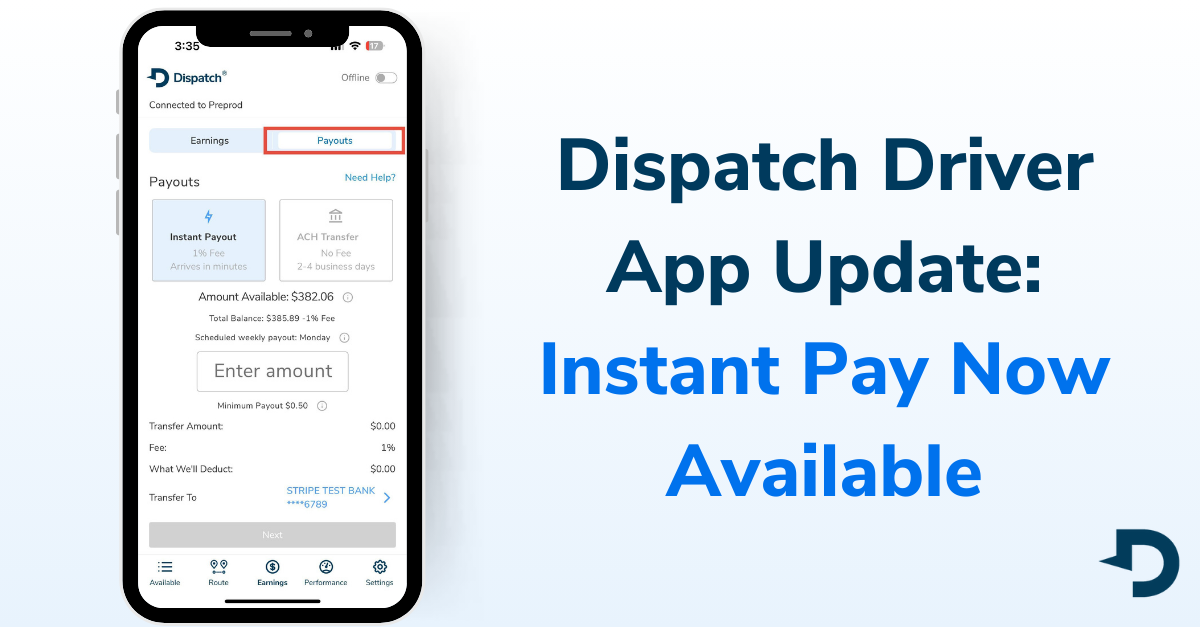
BLOOMINGTON, MINNESOTA / ACCESS Newswire / September 30, 2025 / Dispatch, the technology leader in last-mile delivery, today announced Instant Pay in the Dispatch Driver App, enabling drivers to access their earnings immediately after completing deliveries. The new capability helps drivers cover time-sensitive expenses – like fuel, tolls, and everyday necessities – without waiting for standard payout cycles.
“With Instant Pay, we’re giving drivers more control over their cash flow so they can focus on doing great work,” said Joyce Schofield, VP of Product & UXD at Dispatch. “Drivers asked for faster access to earnings; we designed Instant Pay with them at the center, from the tap-simple experience to transparent terms.”
Meeting Driver Needs
Instant Pay delivers value to drivers in three key areas:
Financial flexibility: Access earnings right after delivery completion, no waiting for cycle payouts.
More control: Drivers choose when to transfer funds based on their needs and schedule.
Competitive parity: Delivers the convenience drivers expect from modern gig platforms within the Dispatch ecosystem they trust.
The launch of Instant Pay builds on Dispatch’s mission to empower drivers with the tools and support they need to thrive in today’s fast-paced gig economy.
About Dispatch: Dispatch is redefining last-mile delivery for the modern business. As the premier B2B delivery platform, Dispatch empowers organizations with scalable, technology-driven solutions that streamline logistics, enhance visibility, and improve customer satisfaction. Through its robust delivery management software, seamless API integrations, and a reliable network of independent contractor drivers, Dispatch enables businesses of all sizes to simplify and optimize their last-mile operations.
ACE’s unique operational model and student-centric focus allow it to add staff, programs, partnerships and scholarships even as financial uncertainty forces layoffs and tuition hikes throughout higher education.
INDIANAPOLIS, INDIANA / ACCESS Newswire / September 30, 2025 / As U.S. colleges and universities cut staff, eliminate programs and hike tuition in response to political and economic uncertainty, American College of Education (ACE) is expanding. ACE is investing in people, programs, and technology, demonstrating that its mission-aligned, efficiency-driven model can thrive even as most of the higher education sector struggles.
“At ACE, we constantly work to keep costs down while developing academic programs that generate real economic value in the workplace for our graduates,” said Geordie Hyland, president and CEO of ACE.
Founded in 2005, ACE is a national innovator providing quality, affordable and accredited online undergraduate, graduate and doctoral degrees. ACE is the third-highest conferrer of education master’s degrees in the United States1, and its low tuition enables nearly nine out of 10 students to graduate debt-free2.
Most U.S. higher education institutions accept federal Title IV student loans, which makes them vulnerable to changes in federal funding. ACE is virtually unique in that it does not accept federal Title IV student loans, avoiding the high overhead and bureaucratic expenses of administering the program.
That also allows the college to avoid uncertainty around federal spending that is forcing cutbacks and price increases across the sector: Renowned institutions including Cornell University and Duke University have announced layoffs, while public universities in Kansas, Michigan, Minnesota, Nebraska and Oklahoma have increased tuition significantly.
Instead, ACE can focus on maintaining low tuition and creating degree and certificate programs that appeal to students seeking career advancement.
“We are absolutely committed to transparency about how much an ACE degree will cost, which allows students to make the best decision for their future,” Hyland said. “With student debt approaching $2 trillion, our growth reflects a broader shift toward accessible, value-driven education.”
To support its growing student base, ACE is investing in the tools and infrastructure required for high-quality online learning. Upgrades in technology, platforms, and user experience are helping the college deliver a seamless and scalable educational model tailored for adult learners. In forgoing the costs associated with dormitories and athletic facilities, ACE can deliver essential academic services while passing the savings along to its students.
Those investments pay off in student success. ACE has an 85% graduation rate for all degree programs combined, significantly exceeding the national six-year completion rate of 62%. ACE students also receive a strong return on investment (ROI): According to a study by the consulting firm Lightcast, ACE students gain $19.20 in future earnings for every dollar of tuition, for a 120.7% annual return.
This performance and growth underscores ACE’s resilience and adaptability during a time of sector-wide instability. The college’s operating model, focus on transparency, and mission-driven approach continue to differentiate it from traditional institutions facing deep financial and operational strains.
American College of Education (ACE) is an accredited, fully online college specializing in high-quality, affordable programs in education, business, leadership, healthcare and nursing. Headquartered in Indianapolis, ACE offers more than 60 innovative and engaging programs for adult students to pursue a doctorate, specialist, master’s or bachelor’s degree, along with graduate-level certificate programs. In addition to being a leader in online education, ACE is a Certified B Corporation and part of a global movement to use the power of business to solve social and environmental problems.
CommunityCare Chooses 1upHealth to Advance Data Exchange, Unlock ROI, and Prepare for the Future
BOSTON, MA / ACCESS Newswire / September 30, 2025 / 1upHealth, a leader in health data interoperability, announced today that CommunityCare, Oklahoma’s largest locally owned health plan, will leverage the company’s full payer solution suite to advance interoperability across its network, helping address the unique challenges of serving rural and underserved communities while simplifying compliance and positioning the health plan for long-term innovation and value creation.
As a health plan serving many rural and underserved communities across Oklahoma, CommunityCare faces the complex challenges of workforce shortages, funding pressures, and disparate access to care – making seamless data exchange even more critical. CommunityCare will use the 1up Platform, along with 1up Patient Access, 1up Provider Directory, 1up Provider Access, 1up Payer-to-Payer Data Exchange, and 1up Prior Authorization, to accelerate its interoperability strategy.
Together, these capabilities will improve data exchange between providers, patients, and other payers, while streamlining operations, strengthening reporting and governance, and creating new opportunities to use data in ways that deliver ROI while benefiting clinicians, health plans, and members alike.
“After a thorough review of available interoperability platforms designed for health plans like ours, 1upHealth emerged as the clear leader,” CommunityCare Chief Technology and Transformation Officer Rusty Wyrick said. “1upHealth makes it simple for us to navigate today’s regulatory requirements while giving us confidence we can continue to innovate and meet our members’ needs as they evolve.”
As a health plan serving a diverse customer base across Oklahoma, ranging from employer groups to Medicare Advantage plans to individual and family plans, CommunityCare sought a partner with a modern, cloud-based infrastructure to ease the technological burden on staff, ensure compliance with regulatory requirements such as the CMS Interoperability and Prior Authorization Final Rule (CMS-0057-F), provide robust reporting, and deliver strategic guidance to drive long-term value.
“We are excited to partner with CommunityCare as they expand their interoperability strategy,” 1upHealth CEO Andrew Boyd said. “Together, we will unlock new opportunities to use data in ways that reduce complexity, deliver value on investment, and, most importantly, improve care for Oklahomans.”
1upHealth is the leading interoperability partner for payers nationwide as they prepare for CMS-0057 and pursue strategies to maximize the value of their data. On Tuesday, October 14, 2025, at 12:00 PM ET, 1upHealth will host a webinar entitled, “Provider Access: From CMS Rule to VBC Results.” Register here.
About CommunityCare
CommunityCare is Oklahoma’s largest locally owned health plan offering group and individual plans, Medicare Advantage plans, an employee assistance program and a workers’ compensation plan. The health plan’s mission is to serve Oklahomans with local, personalized and compassionate services in pursuit of every member’s optimal health and wellbeing. Located in Tulsa, CommunityCare is owned by Ascension St. John and Saint Francis Health System.
About 1upHealth
Driven by a purpose of better healthcare for all through better data, 1upHealth is the national leader in health data interoperability and one of the fastest-growing health IT companies in the United States. Our modern data platform is built on a standards-based cloud architecture specifically designed for the healthcare industry, making it easy to acquire, manage, share, and compute data. From leading health plans and state Medicaid agencies to innovative digital health organizations and top-performing ACOs, health organizations rely on 1upHealth to seamlessly exchange data across the healthcare ecosystem to reduce risk, lower costs, and improve patient outcomes. Visit our website.
All new Alaska licensees are required to complete 30 hours of Post-Licensing within one year of initial licensure.
DENVER, CO / ACCESS Newswire / September 30, 2025 / While Post-licensing education is a requirement for all newly licensed real estate salespersons in Alaska, it is also a fantastic opportunity to sharpen real estate skills and knowledge. The CE Shop makes it easy to meet this 30-hour requirement with flexible, online learning designed to fit busy schedules.
There is no reason to delay and risk losing licensure. Real estate salespersons can get ahead of the game and tackle the growing Alaska real estate market with confidence. The Alaska real estate market is heating up with home prices up 9.1% year-over-year in July, while the number of homes for sale rose by 3.9%, according to Redfin. With such high demand and limited inventory, qualified real estate professionals are more crucial than ever to help guide buyers and sellers through this fast-moving market.
With Alaska’s healthy real estate market, now is the perfect time to invest in a real estate career. Keeping up with state regulations pays off–the average salary for an Alaska real estate agent in 2025 is $89,575, according to Indeed September 2025 data.
Why Choose The CE Shop?
State-approved, mobile-friendly courses
Unlimited practice exams to build confidence before the licensing test
Highest pass rates in the nation
100% online, self-paced courses
Customer support available 6 days/week
Comprehensive career resources and continuing education
About The CE Shop The CE Shop is the leading provider of professional real estate education with online mortgage, real estate, home inspection, and appraisal courses available throughout the United States. The CE Shop produces quality education for professionals across the nation, whether they’re veterans in their industry or are looking to launch a new career. We believe that the right education can truly make a difference. Visit TheCEShop.com to learn more.
AMBLER, PA / ACCESS Newswire / September 30, 2025 / Clutch is pleased to announce a new collaboration with Welby Health, a leader in virtual care solutions that enhance on‑premise services for provider practices and ACOs while boosting patient outcomes.
Welby Health is your clinic’s virtual care extension, delivering chronic care management, remote patient monitoring, and transitional care support via licensed RN case managers and advanced digital tools. Their model eases staff workloads, improves revenue, and strengthens patient engagement all while improving outcomes, such as HEDIS compliance and readmission rates. To support Welby’s mission,Clutch will apply its AI‑powered Retention, Loyalty, and Engagement Platform to build longitudinal patient profiles, enabling highly targeted personalization. Together, Clutch and Welby Health will elevate program efficacy through tailored messaging, optimized via AI-driven insights and automation. “This partnership reflects our shared commitment to human-centered healthcare,” said Jim Mayhall, President of Clutch Health. “Welby’s model is a perfect fit for the power of Clutch personalization. By using data to speak to each patient as an individual, we can drive engagement that genuinely improves outcomes and builds trust at scale.“
Welby has several primary goals that the Clutch platform will help them achieve at scale.
Boost Enrollment in Welby Programs The Clutch platform enables Welby to deliver personalized, timely outreach that meets patients on their preferred channels whether SMS, email, or mobile. Using predictive AI, each message is designed to align with patient behavior and readiness, removing friction and increasing the likelihood of enrollment.
Foster a Feeling of Being Truly Heard With dynamic segmentation, Welby can group patients based on real-time data points such as care needs, communication preferences, and behavior patterns. This allows messaging to reflect each patient’s unique experience, reinforcing that they’re seen and understood. It builds trust at scale, while maintaining the integrity of individualized care.
Increase Adherence Through Customized Content To keep patients engaged, Clutch helps Welby deliver content that aligns with each patient’s journey. By responding to patient behavior and clinical data in real time, content becomes more relevant and effective, ultimately improving adherence and long-term outcomes.
Seth Merritt, CEO at Welby Health states, “Clutch gives us a new level of precision in how we communicate with patients. It allows us to be more thoughtful, more timely, and ultimately more effective in helping people stay connected to their care.”
About Clutch Clutch is an AI‑powered Retention, Loyalty, and Engagement Platform that helps healthcare and commerce organizations build stronger relationships with patients, members, and customers. Through data-driven personalization, automation, and incentives, Clutch drives measurable outcomes in loyalty, retention, and health engagement.
About Welby Health Welby Health empowers independent practices, accountable care organizations, and health systems with a virtual care model that streamlines care management, remote monitoring, and transitions between care settings. Its hallmark is combining NCQA-accredited care protocols with cutting‑edge technology to improve clinical outcomes, lift revenue, and lighten clinician workloads. The WelbyCare platform delivers measurable success such as high reimbursement compliance, NPS, and improved HEDIS scores through tailored, efficient care coordination
Closing adds $5 million in marketable securities, strengthens financial position, and complements MIRA’s advancing programs including Ketamir-2 and MIRA-55
MIAMI, FLORIDA / ACCESS Newswire / September 30, 2025 / MIRA Pharmaceuticals, Inc. (NASDAQ:MIRA) (“MIRA” or the “Company”), a clinical-stage pharmaceutical company focused on developing novel therapeutics for neurologic, neuropsychiatric, and metabolic disorders, today announced that it has completed its acquisition of SKNY Pharmaceuticals, Inc. (“SKNY”).
As part of the transaction, SKNY fulfilled all closing obligations, contributing $5 million in marketable securities to MIRA, further strengthening the Company’s balance sheet.
“The successful closing of the SKNY acquisition marks a pivotal milestone for MIRA, both financially and strategically,” said Erez Aminov, CEO of MIRA. “We are expanding our pipeline into obesity and nicotine addiction with SKNY-1, while continuing to advance Ketamir-2 through clinical development and progressing MIRA-55 as a novel approach to inflammatory and nociceptive pain. Together, these programs position MIRA to address major unmet needs across some of the largest healthcare markets.”
SKNY-1: A Next-Generation Oral Therapy Candidate for Obesity and Smoking Cessation
SKNY-1 is a differentiated oral drug candidate designed to modulate CB1, CB2, and MAO-B pathways to address energy storage, lipid metabolism, appetite, cravings, and reward – without the psychiatric side effects that limited earlier CB1-targeting drugs.
Key preclinical findings include:
Up to 30% reduction in body weight without muscle loss in validated animal models.
Marked modification of metabolic parameters.
Reversal of nicotine craving and high-calorie food cravings, supporting dual therapeutic potential.
Favorable CNS safety profile compared with prior CB1-targeting agents.
Dr. Itzchak Angel, Chief Scientific Advisor at MIRA, commented:
“SKNY-1’s unique biased CB1 signaling and favorable CB2/MAO-B activity translate into robust and broad-spectrum efficacy across metabolic syndrome, obesity, and addiction models while addressing the safety limitations of earlier agents. We believe it has the potential to be best-in-class.”
Ketamir-2: Clinical-Stage Development in Neuropathic Pain
On September 22, 2025, MIRA announced favorable topline results from the single ascending dose (SAD) portion of its ongoing Phase 1 clinical trial of Ketamir-2, its proprietary next-generation ketamine analog. The study demonstrated Ketamir-2 was safe and well tolerated across all dose levels, with predictable absorption, once-daily dosing potential, and no CNS side effects typically associated with ketamine.
Preclinical studies further support Ketamir-2’s potential in neuropathic pain, depression, and PTSD, reinforcing its profile as a differentiated non-scheduled therapeutic.
MIRA-55: A Novel Approach to Inflammatory Pain
MIRA-55, the Company’s oral pharmaceutical cannabis-derived candidate, has shown preclinical results in inflammatory and nociceptive pain comparable to morphine. Unlike opioids, MIRA-55 is designed to provide pain relief without addictive risk, positioning it as a promising next-generation analgesic.
Market Opportunity
Obesity, metabolic disorders, nicotine addiction, neuropathic pain, nociceptive and inflammatory pain, depression, and post-traumatic stress disorder (PTSD) represent some of the largest and fastest-growing healthcare markets, each with high prevalence and substantial unmet medical need.
MIRA is directly addressing these areas through its pipeline:
SKNY-1 for obesity and nicotine addiction.
Ketamir-2 for neuropathic pain with potential in depression and PTSD.
MIRA-55 for inflammatory and nociceptive pain.
Additional preclinical programs targeting cognitive impairment and related neuropsychiatric disorders.
Together, these programs underscore MIRA’s strategy of advancing differentiated, non-opioid, and non-addictive therapeutic options aimed at improving patient outcomes in high-value markets.
About MIRA Pharmaceuticals, Inc.
MIRA Pharmaceuticals, Inc. (NASDAQ:MIRA) is a clinical-stage pharmaceutical company focused on the development and commercialization of novel therapeutics for neurologic, neuropsychiatric, and metabolic disorders. The Company’s pipeline includes oral drug candidates designed to address significant unmet medical needs in neuropathic pain, inflammatory pain, obesity, addiction, anxiety, and cognitive decline.
This press release and the statements of MIRA’s management related thereto contain “forward-looking statements,” which are statements other than historical facts made pursuant to the safe harbor provisions of Section 27A of the Securities Act of 1933, as amended, and Section 21E of the Securities Exchange Act of 1934, as amended. These statements may be identified by words such as “aims,” “anticipates,” “believes,” “could,” “estimates,” “expects,” “forecasts,” “goal,” “intends,” “may,” “plans,” “possible,” “potential,” “seeks,” “will,” and variations of these words or similar expressions that are intended to identify forward-looking statements. Any statements in this press release that are not historical facts may be deemed forward-looking. Any forward-looking statements in this press release are based on MIRA’s current expectations, estimates, and projections only as of the date of this release and are subject to a number of risks and uncertainties (many of which are beyond MIRA’s control) that could cause actual results to differ materially and adversely from those set forth in or implied by such forward-looking statements, including related to MIRA’s potential merger with SKNY Pharmaceuticals, Inc. These and other risks concerning MIRA’s programs and operations are described in additional detail in the Annual Report on Form 10-K for the year ended December 31, 2024, and the Form 14A filed by MIRA on June 18, 2025, and other SEC filings, which are on file with the SEC at www.sec.gov and on MIRA’s website at https://www.mirapharmaceuticals.com/investors/sec-filings. MIRA explicitly disclaims any obligation to update any forward-looking statements except to the extent required by law.
ST. GEORGE’S, NEWFOUNDLAND AND LABRADOR / ACCESS Newswire / September 30, 2025 / Atlas Salt Inc. (“Atlas Salt” or the “Company”) (TSXV:SALT)(OTCQB:REMRF)(FRA:9D00) announces the results of its Updated Feasibility Study (“UFS”) on the 100%-owned Great Atlantic Salt Project (“Great Atlantic” or the “Project”) located in Western Newfoundland.
UFS Highlights
(all figures are in Canadian dollars and include annual escalation, unless otherwise noted)
Life of Mine (“LOM”) Sustaining Capital : $609 million
Average Annual LOM Operating Cashflow (EBITDA 1 ) in Operations : $325 million per annum (“pa”)
Average Annual LOM Post-Tax Free Cashflow in Operation : $188 million pa
Total Undiscounted Post-Tax Cashflow (including Initial Capital Cost) : $3.93 billion
Average Annual Steady State Production LOM : 4.0 million tonnes of high-purity road salt
Mine Life : 24 years based on Proven and Probable Reserves
Average Operating Cost : $28.17 per tonne free on board (“FOB”) mine site port
Production Rate : 4.0 million tonnes per annum (“Mtpa”)
Port Capacity : Designed for scalable throughput up to 4.0 Mtpa
1 EBITDA is a non ‑ International Financial Reporting Standards (“IFRS”) financial measure and represents earnings before interest, income taxes, depreciation and amortization. It is not defined under IFRS and may not be comparable to similar measures presented by other companies. Management believes that this measure provides useful supplemental information to investors in evaluating the Project’s operating performance and its ability to generate cash flows. EBITDA is closely approximated in this model by Operating Cashflow, defined as Net Revenues less cash operating costs.
Nolan Peterson, CEO and Director of Atlas Salt, stated : “The Updated Feasibility Study marks another significant milestone in Atlas Salt’s journey, highlighting Great Atlantic’s potential as the leading undeveloped salt project in North America. This study reinforces our vision to deliver a long-life, low-cost operation at scale. It is supported by technical and logistical enhancements from the 2023 Feasibility Study that further reduce risks and position us for future success.
The improvement in projected free cash flow is especially significant as it validates the strengthened economics of Great Atlantic and enhances lender confidence in financing this world-class development. With the previously announced regulatory approval of our Early Works Development Plan, Atlas Salt is strategically positioned to advance Great Atlantic and create substantial value for all stakeholders.
We extend our gratitude to our employees, partners, the town of St. George’s and the broader Western Newfoundland community, and our dedicated shareholders for their ongoing support and commitment as we complete the UFS and move forward with our plans. Their belief in Atlas Salt drives our progress. With the foundation we have built, and the momentum of this updated feasibility study, we look forward with confidence to realizing Great Atlantic’s potential to help shape the future of salt supply in North America.”
Summary of Updated Feasibility Study
The UFS was prepared by SLR Consulting (Canada) Ltd. (“SLR”), with contributions from specialized engineering and technical partners including Shaft and Tunnel Consulting Services Ltd., Terrane Geoscience Inc., Sandvik Mining and Rock Solutions (“Sandvik”), and Tamarack Resources.
The Updated Feasibility Study builds on the 2023 Feasibility Study (“2023 FS”), incorporating optimizations in mine design, throughput, port logistics, and capital efficiency. The results confirm Great Atlantic as a large scale, high-purity, low-cost underground salt project strategically positioned to serve the North American market.
General Description of Operations and Process Plan
The capital and operating cost estimates in the Updated Feasibility Study have been prepared in accordance with the guidelines of the Association for the Advancement of Cost Engineering (AACE) for a Class 3 estimate. This level of estimate is typically based on feasibility-level engineering, vendor quotations, and discipline-level design sufficient to support a financing decision. The accuracy range for initial capital costs is considered to be within approximately -10% to +30%, while the accuracy for operating costs is estimated to be within approximately -10% to +20%. Costs are based on Q3 2025 data.
The estimates incorporate contingency allowances to reflect the current design, anticipated execution risks, and prevailing market conditions for labour, materials, and equipment. They are also benchmarked against comparable projects and historical data for underground salt operations.
Table 1 – Summary of UFS Economic Results and Assumptions 2
UFS Economic Model Results and Assumptions
Value
2025 Salt Price Assumed
($/t)
$81.67 / t FOB port.
Pre-Tax NPV₈ & IRR
($/%)
$1.68 billion / 27.1 %
Post-Tax NPV₈ & IRR
($/%)
$920 million / 21.3%
Undiscounted Post-Tax Cashflow (LOM)
($)
$3.93 billion
Average LOM Operating Cashflow (EBITDA 1 )
($/a)
$325 million
Average LOM Post-Tax Cashflow
($/a)
$188 million
Post-Tax Payback Period (from first production) (Years)
4.2 years
Initial Capital
($)
$589 million
LOM Sustaining Capital
($)
$609 million
Average LOM Operating Cost (FOB port)
($/t)
$28.17 / t
Average Annual Steady-State Salt Production
(Mtpa)
4.0 Mt
Life of Mine (LOM)
(Years)
24 years
Total Tonnes Produced / Sold (LOM)
(Mt)
90.3 Mt
Estimated Reserve Grade
(% NaCl)
95.9 % NaCl
2 Unless otherwise noted, values are presented in Canadian dollars and expressed in real terms as of 2025. Certain figures (e.g., NPV, IRR, payback) are derived outputs of the discounted cash flow model rather than direct 2025-dollar inputs. The salt price assumption is stated in 2025 Canadian dollars FOB mine site port facility. Salt pricing was determined by an independent third-party marketing study. The port facility is assumed to be operated by a third-party contractor, with associated costs incorporated into the economic analysis.
Summary of Strategic & Technical Advancements in UFS
Optimized Production Plan – Incorporates updated geotechnical, ventilation, and infrastructure studies to support efficient construction and long-term operations.
EquipmentIntegration – Deployment of Sandvik continuous mining equipment to improve productivity and reduce unit operating costs.
Port& Logistics Improvements – Upgraded stockpile and shiploading configurations to support high-capacity, efficient loading.
EconomicResilience – Financial model reflects updated costs, pricing assumptions (including inflationary trends), and robust project economics.
RegulatoryAlignment – Incorporates all post-Environmental Assessment release conditions, ensuring compliance.
These changes collectively demonstrate improved project resilience and stronger cash flow generation and returns potential, while further de-risking execution.
Detailed Comparison to 2023 Feasibility Study
Atlas Salt has summarized the quantitative differences between the 2023 Feasibility Study (“2023 FS”) and the Updated Feasibility Study (“UFS”). Unless otherwise noted, figures are presented as LOM totals or averages.
Table 2 – Detailed Comparison to 2023 Feasibility Study
Metric
2023 FS
2025 UFS
Variance (Abs.)
Variance (%)
Production Rate
(Mtpa)
2.5
4.0
+1.5
+60%
Mine Life
(years)
34
24
(10)
(29.5%)
Tonnes Produced / Sold
(LOM, Mt)
83.7
90.3
+6.6
+8%
Salt Price
(FOB port, $/t, LOM Average)
$124.86
$118.49
($6.37)
(5%) 3
Operating Cost
($/t)
$27.49
$22.00
($5.49)
(20%) 4
Pre-tax NPV8
($M)
$1,017
$1,683
+$666
+65%
After-tax NPV8
($M)
$553M
$920M
+367M
+66%
Average LOM Operating Cashflow in Operation (EBITDA 1 )
$M/a
$211M
$315M
+$104M
+49%
Average LOM Post-Tax Cashflow in Operation
$M/a
$121M
$188M
+$67M
+55%
Post-tax IRR
(%)
18.5%
21.3%
+2.8%
+15%
Initial Capital
($M)
$480M
$589M
+$109M
+23%
Sustaining Capital
(LOM, $M)
$600M
$609M
+$9M
+2%
Payback Period
(years)
4.8
4.2
(0.6)
(12%)
Post-Tax NPV 8 / Initial CAPEX Ratio
1.15
1.56
+0.41
+36%
[3] From shorter overall mine life
[4] From shorter overall mine life and economies of scale
UFS Technical Summary
Project Location and Access
The Great Atlantic Salt Project is located near St. George’s, Newfoundland, approximately 3 km from the Trans-Canada Highway and adjacent to deepwater port facilities on the west coast of Newfoundland. The location provides direct access to tidewater shipping routes serving Eastern Canada, the U.S. Northeast and Western Europe.
Geology and Mineral Resources
The Great Atlantic deposit is a flat-lying, laterally extensive, high-purity halite formation with minimal insoluble content. No changes were made to the Mineral Resource estimate completed in the 2023 FS. Table 3 provides a summary of the Mineral Resource estimate by SLR, with an effective date of September 30, 2025.
Table 3 – Mineral Resource Estimate – September 30, 2025
Category
Horizon
Tonnes (Mt)
Grade (% NaCl)
Contained NaCl (Mt)
Indicated
1-Salt
–
–
–
2-Salt
160
95.9
154
3-Salt
223
96.0
214
Total
383
96.0
368
Inferred
1-Salt
195
95.3
186
2-Salt
288
95.3
274
3-Salt
385
95.0
366
Total
868
95.2
827
Notes:
CIM (2014) definitions were followed for Mineral Resources.
Mineral Resources are estimated without a reporting cut-off grade. Reasonable Prospects for Eventual Economic Extraction were instead demonstrated by reporting within Mineable “Stope” Optimised (MSO) shapes, with a minimum height of 5 m, minimum width of 20 m, length of 40 m, and minimum grade of 90% NaCl, with a 5 m minimum pillar width between shapes.
Bulk density is 2.16 t/m 3 .
Mineral Resources that are not Mineral Reserves do not have demonstrated economic viability.
Mineral Resources are inclusive of Mineral Reserves.
Salt prices are not directly incorporated into the Mineral Resource MSO minimum target grades, however, the mean Mineral Resource grades exceed the 95.0% NaCl (± 0.5%) specification outlined in ASTM Designation D632-12 (2012).
Numbers may not add due to rounding.
The Updated Feasibility Study uses the same Mineral Resource estimate completed in the 2023 FS. There have been no changes to the Mineral Resource estimate between the 2023 FS and the UFS (2025). The Mineral Resource estimate has a new effective date of September 30, 2025.
Mineral Reserves
The Updated Feasibility Study is supported by the Mineral Reserve estimate summarized in Table 4. These Probable Reserves have been prepared in accordance with NI 43-101 and reflect appropriate modifying factors for mining, recovery, and economics at a feasibility study level. The Mineral Reserves have an effective date of September 30, 2025.
Table 4 – Summary of Mineral Reserves
Category
Horizon
Tonnes (Mt)
Grade (% NaCl)
Contained NaCl (Mt)
Probable
2-Salt
39.3
95.9
37.6
3-Salt
55.8
95.9
53.5
Total
All
95.0
95.9
91.1
Notes:
CIM (2014) definitions were followed for Mineral Reserves.
Salt prices are not directly incorporated into the Mineral Reserve designs, however the mean Mineral Reserve grades exceed the 95% NaCl (±0.5%) specification outlined in ASTM Designation D632-12(2012).
A minimum mining height of 5.0 m and width of 17.0 m were used for production rooms.
Sterilization zone 8.0 m below the top of salt and 5.0 m above the bottom of salt have been applied.
A mining extraction factor of 100% was applied to all excavations.
Bulk density is 2.16 t/m3.
Planned process recovery is 95%.
Numbers may not add due to rounding.
Table 5 compares the Probable Reserves from the 2023 FS with the current UFS.
Table 5 – Mineral Reserve Comparison
Category
Horizon
2023 FS Reserves
2025 UFS Reserves
Variance (Abs.)
Variance (%)
Probable
(Mt)
2-Salt
37.7 Mt @ 95.9% NaCl
39.3 Mt @ 95.9% NaCl
1.5 Mt
+4.1%
3-Salt
50.3 Mt @ 96.0% NaCl
55.8 Mt @ 95.9% NaCl
5.4 Mt
+10.8%
Total
88.1 Mt @ 96.0% NaCl
95.0 Mt @ 95.9% NaCl
7.0 Mt
+7.9%
The changes are principally related to different pillar and room dimensions, and minor variances in level spacing.
Mining Method and Design
Method : Room-and-pillar underground mining using continuous miners.
PillarConfiguration : Designed for long-term stability, with pillar dimensions and sequencing optimized for maximum extraction while ensuring ground control.
Development : Access via surface portal and conveyor decline system; mine layout configured for scalable expansion.
ProductionRate : 4.0 Mtpa steady-state by Year 4, with ramp-up commencing in Year 1.
Daily Production Rate: Approximately 11,500 tonnes per day at steady-state capacity.
Processing and Product Handling
Salt is crushed and screened underground to market specifications, conveyed to surface, and transported to the port via covered conveyor. No chemical processing or water usage in processing is required, other than the application of an anti-caking agent immediately prior to shipment offsite.
Infrastructure and Logistics
Port : Dedicated port storage and shiploading system designed for 4.0 Mtpa throughput at full operations.
Shiploading : Continuous conveyor-fed shiploader with optimized cycle times to minimize vessel demurrage.
Storage : Surface stockpile capacity of approximately 72 kt, equivalent to 6.5 days of average production.
Utilities : Connection to provincial power grid with dedicated substation;
Power: The Project is expected to require approximately 10 megawatts (MW) of connected load at steady-state operations, sourced from the provincial grid via a dedicated substation.
Accommodation: No camp facilities are included in the design, with the Project benefiting from proximity to established communities and existing regional infrastructure.
Operating Costs
The operating cost estimates were developed from first principles using a combination of vendor quotations, budgetary pricing from equipment suppliers, labour and power cost assumptions specific to Newfoundland, and benchmarking against comparable underground salt operations. Mining, processing, and port handling costs reflect the planned use of continuous miners, conveyor haulage, and high-capacity shiploading infrastructure. General and administrative (G&A) costs are based on staffing requirements and site services, while closure and bonding provisions reflect anticipated regulatory obligations. Costs are expressed on a LOM average basis and are considered accurate to within -10% to +20%, consistent with a feasibility-level estimate.
Table 6 – Operating Cost Summary Table
Item
Total Operating Cost ($M)
Unit Operating Cost ($/t)
Mining
$1,354M
$15.00
Processing & Handling
$297M
$3.29
G&A
$335M
$3.71
Port Operations
$557M
$6.17
Total
$2,543M
$28.17
Capital Costs
The initial capital cost for the Great Atlantic Salt Project is estimated at approximately $589 million , covering underground mine development, mining equipment, surface infrastructure, port facilities, utilities, and indirect costs, with contingency applied to reflect feasibility-level design maturity. Sustaining capital over the LOM is estimated at $609 million total , averaging approximately $26.5 million per year , and primarily relates to underground development, conveyor extensions, and equipment replacement.
Table 7 – Initial and Sustaining Capital Summary Table
Area
Initial Capital
($M)
LOM Sustaining
($M)
Total
($M)
Underground Mine Development & Equipment
($M)
$203M
$545M
$748M
Processing Plant
($M)
$42M
$31M
$73M
Surface Infrastructure & Port Facilities
($M)
$132M
$33M
$165M
Owner’s Costs & Indirects
($M)
$134M
$134M
Contingency (approx. 15.1%)
($M)
$77M
$77M
Total Capital
($M)
$589M
$609M
$1,198M
Note: Direct Sustaining CAPEX figures are inclusive of Indirects and Contingency
LOM Production and Cash Flow Summary
The Great Atlantic mine plan supports a long-life, consistent production profile, with no significant production variance once full ramp up is achieved.
Table 8 – LOM Production and Cash Flow Summary
Parameter
Value (UFS Base Case)
Life of Mine (LOM)
24 years
Total Tonnes Mined
95.8 Mt
Average Annual Steady-State Production
4.0 Mt salt
Cumulative Post-Tax Cash Flow
$3.93 B
Average Annual Post-Tax Cash Flow in Operation
$188 M
Sensitivity Analysis
The Project economics are most sensitive to salt price, capital costs, and operating costs assumptions. Sensitivity testing indicates that the Updated Feasibility Study maintains robust economics across a wide range of assumptions.
Table 9 – Economic and Sensitivity Analysis
Sensitivity Variance
Sensitivity Value
Post-Tax NPV₈
Post-Tax IRR
(%)
(By Row)
($M)
(%)
2025 Salt Price Sensitivity ($/t FOB Port)
(10%)
$73.50
$474M
16.9%
0%
$81.67
$920M
21.3%
10%
$89.84
$1,483M
25.0%
CAPEX Sensitivity
($)
(10%)
$530M
$963M
22.9%
0%
$589M
$920M
21.3%
10%
$649M
$891M
20.2%
OPEX Sensitivity
($/t)
(10%)
$19.80/t
$973M
22.0%
0%
$22.00/t
$920M
21.3%
10%
$24.20/t
$881M
20.9%
Even under downside scenarios, the Project demonstrates positive economics and resilience, highlighting its strategic competitive positioning in the North American road salt market.
Market Opportunity
North America consumes over 25 million tonnes of road salt annually, a significant portion of which is imported, with Eastern Canada and the U.S. Northeast representing the highest concentration of demand. Regional supply challenges, combined with increasing winter severity and aging supply bases, create a strategic opportunity for Great Atlantic to deliver reliable, high-purity supply into these critical markets.
Permitting and Regulatory Approvals
The Great Atlantic Salt Project is advancing within a well-defined permitting framework under the Government of Newfoundland and Labrador.
Environmental Assessment (EA): Conditionally released from the provincial EA process in 2024, establishing government approval to advance the Project.
Early Works Development Plan: Approved in 2025, enabling shovel-ready commencement of site preparation, civil works, and other enabling infrastructure.
Capital Development Plan: To be submitted following completion of detailed engineering, covering underground mine development, processing, and port facilities.
Commercial Production Approval: The final stage permit, aligned with commissioning of mine and port facilities.
The permitting pathway for Great Atlantic is clear, with major approvals in place and a structured process established for capital development and eventual production.
Next Steps
Atlas Salt will advance the Project through:
NI 43-101 Technical Report Filing: Submission of the Updated Feasibility Study Technical Report within 45 days.
Financing Discussions: Continued engagement with project lenders, strategic offtake partners, and equity participants to advance funding solutions.
Detailed Engineering and Procurement: Progression of engineering design and procurement packages in alignment with the UFS.
Stakeholder and Community Engagement: Ongoing consultations with local communities, Indigenous groups, and stakeholders to ensure alignment and transparency.
This news release describes an updated Mineral Resource estimate, a feasibility study and cash flow, based upon geological, engineering, technical and cost inputs developed by SLR Consulting (Canada) Ltd. A National Instrument 43-101 Technical Report (NI 43-101) will be filed on SEDAR within 45 days. The technical information in this news release has been prepared in accordance with the Canadian regulatory requirements set out in NI 43-101 and reviewed and approved by Pierre Landry, P.Geo., David M. Robson, P.Eng., MBA, Lance Engelbrecht, P.Eng., Derek J. Riehm, M.A.Sc., P.Eng., and Graham G. Clow, P.Eng. each of whom is a “qualified person” under National Instrument 43-101 – Standards of Disclosure for Mineral Projects (“NI 43-101”).
About Atlas Salt
Atlas Salt is developing Canada’s next salt mine and is committed to responsible and sustainable mining practices. With a focus on innovation and efficiency, the company is poised to make significant contributions to the North American salt market while upholding its values of environmental stewardship and community engagement.
This news release contains “forward-looking information” and “forward-looking statements” (collectively, “forward-looking information”) within the meaning of applicable Canadian securities laws, including the policies of the TSX Venture Exchange. All statements in this release, other than statements of historical fact, are forward-looking information. Forward-looking information is often identified by words such as “anticipates,” “believes,” “expects,” “intends,” “plans,” “estimates,” “may,” “could,” “would,” “will,” “potential,” “opportunity,” “strategy,” “target,” or similar expressions and variations, and include, without limitation, statements with respect to: the results, assumptions, and conclusions of the Updated Feasibility Study for the Great Atlantic Salt Project, including projected NPV, IRR, payback, capital and operating costs, production rates, mine life, cash flows, and economics; the anticipated timing and results of permitting, approvals, engineering, financing, procurement, and construction activities; expectations regarding market demand for road salt in North America, pricing assumptions, and strategic positioning of the Project; the ability to secure project financing and offtake arrangements on acceptable terms; the expected benefits of technical enhancements, mining methods, and logistics improvements; plans for stakeholder, Indigenous, and community engagement; and future exploration, development, and production activities
Forward-looking information is based on the Company’s current expectations, estimates, assumptions, and beliefs as of the date of this release, which include, but are not limited to: assumptions regarding commodity prices and demand for road salt; exchange rates; the accuracy of mineral reserve and resource estimates; the ability to obtain permits, regulatory approvals, and financing on acceptable terms; anticipated capital and operating costs; availability of labour, equipment, and services; compliance with environmental, health, and safety laws; and general business, economic, and market conditions.
Forward-looking information involves known and unknown risks, uncertainties, and other factors that may cause actual results or events to differ materially from those expressed or implied by such forward-looking information. These risks and uncertainties include, but are not limited to: risks relating to the accuracy of mineral reserve and resource estimates; risks inherent in the feasibility study process and that the Project economics may not be realized; operating and technical risks associated with underground mining and salt production; risks related to permitting, environmental regulation, and community relations; the ability to raise sufficient financing on acceptable terms; volatility in commodity prices, input costs, and exchange rates; risks related to construction schedules and cost overruns; risks related to third-party contractors and service providers; political, regulatory, and legal risks; and general business and market conditions. Additional information regarding the Company, including risk factors that may affect its business and operations, is available within the Company’s continuous disclosure documents within the Company’s profile on SEDAR+ at www.sedarplus.ca .
Readers are cautioned not to place undue reliance on forward-looking information. The forward-looking information contained in this news release is made as of the date hereof, and Atlas Salt disclaims any obligation to update or revise such information, whether as a result of new information, future events, or otherwise, except as required by applicable securities laws.
Neither the TSX Venture Exchange nor its Regulation Services Provider (as that term is defined in TSX Venture Exchange policies) accepts responsibility for the adequacy or accuracy of this release.
U.S. Securities Law Disclaimer
This news release does not constitute an offer to sell or a solicitation of an offer to buy any securities in the United States. The securities of Atlas Salt have not been and will not be registered under the United States Securities Act of 1933, as amended (the “U.S. Securities Act”), or any state securities laws, and may not be offered or sold within the United States or to, or for the account or benefit of, U.S. persons unless registered under the U.S. Securities Act and applicable state securities laws or pursuant to an exemption therefrom.
Non-IFRS Financial Measures
This news release contains references to certain financial measures such as “EBITDA,” “Operating Cashflow,” “Free Cashflow,” and “Return on Capital Employed (ROCE)” which are not recognized measures under International Financial Reporting Standards (“IFRS”). These non-IFRS measures do not have standardized meanings prescribed under IFRS and therefore may not be comparable to similar measures presented by other issuers.
EBITDA / Operating Cashflow – In this release, EBITDA is closely approximated by Operating Cashflow, which is defined as net revenues less cash operating costs before interest, taxes, depreciation, and amortization. Management believes this measure is useful in evaluating the Project’s ability to generate cash from operations.
Free Cashflow – Defined as post-tax cashflow after deducting initial and sustaining capital expenditures. Management uses this measure to assess the cash potentially available for reinvestment, debt repayment, or distribution to shareholders.
Management believes that these measures provide meaningful information to investors and analysts in assessing the economic potential and financial performance of the Great Atlantic Salt Project. However, they should not be considered in isolation, as a substitute for, or superior to, measures prepared in accordance with IFRS.